


Let’s Be Honest — Digging Blind Is a Gamble Nobody Wants to Take
Picture this: a construction crew rolls up to a site, confident, caffeinated, and ready to break ground. The excavator fires up, takes one big bite into the earth — and hits a live gas line. Or a fibre optic cable. Or worse, a pressurised water main.
Suddenly, your “routine dig” is a six-figure emergency, a potential fatality, and a headline nobody wanted.
That’s the story potholing exists to prevent.
If you’re in construction, civil works, or infrastructure development in Australia, potholing in construction is one of those non-negotiables that separates the crews who get it right from the ones who end up on a WorkSafe report. And yet, a surprising number of people still ask: what actually is it?
Let’s break it down — properly.
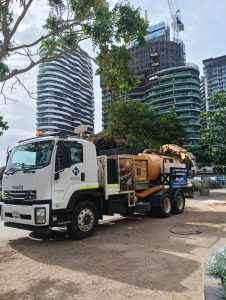
So, What Is Potholing in Construction?
At its core, potholing (also called vacuum excavation or hydro excavation) is the process of exposing underground utilities by carefully excavating a small, precise test hole — before any major digging begins.
Rather than sending in a full excavator and hoping for the best, potholing uses high-pressure water or air to break up the soil, combined with a powerful vacuum system to remove the debris. The result? A neat, controlled hole that exposes exactly what’s buried underground — without damaging it.
Think of it like keyhole surgery, but for the ground.
[Insert image: Hydrovac truck on an Australian construction site performing potholing]
The technique has become standard practice across Australia, particularly in urban environments where underground infrastructure is dense, old, and often poorly mapped. Utility mapping services like those offered by Hydrovac pty limited often incorporate potholing as part of a broader subsurface investigation strategy — combining it with electronic detection and GPR (ground-penetrating radar) to build a complete picture of what lies beneath.
Why Is Potholing So Important Before a Major Dig?
Here’s the thing about underground utilities in Australia — they’re everywhere, and the maps aren’t always reliable. Decades of development, shifting soil conditions, and inconsistent record-keeping mean what’s on the “as-built” drawing doesn’t always match what’s actually in the ground.
That’s not a small problem. It’s a massive liability.
So before any significant excavation kicks off, potholing gives your team ground truth — the actual, real-world position and depth of every service running beneath the surface. Gas. Power. Telecoms. Stormwater. Sewer. Water mains. All of it.
Let’s get into the four reasons builders lean on it every single time.
4 Reasons Builders Use Potholing Before Every Major Dig
- It Keeps People Alive — Worker Safety Is Non-Negotiable
This one’s first for a reason.
Striking a live electrical cable during excavation can be fatal. Hitting a gas main can trigger an explosion. Breaching a pressurised water main can cause a blowout that injures workers and collapses surrounding soil in seconds.
Australia’s work health and safety legislation — including the WHS Act and state-based equivalents — puts the duty of care squarely on contractors and project managers. “We didn’t know it was there” is not a defence. It’s negligence.
Potholing removes the guesswork. By physically exposing each utility before heavy machinery gets near it, workers know exactly what they’re dealing with. Depths are confirmed. Clearances are calculated. Everyone goes home.
And honestly? No project schedule is worth a human life. Not even close.
[Insert image: Underground utility lines exposed via hydro excavation, clearly labelled]
- It Protects Critical Infrastructure — And Your Budget
Damaging an underground asset isn’t just dangerous. It’s expensive.
We’re talking about repair costs, emergency callouts, traffic management, compensation claims, and potential fines from regulatory bodies. Depending on what gets hit — a major telecoms cable serving thousands of businesses, or a critical water main supplying an entire suburb — you could be looking at hundreds of thousands of dollars in damages. Sometimes more.
And here’s the kicker: your insurance may not cover it if you failed to take reasonable precautions. Potholing is considered industry best practice in Australia. Skipping it is hard to justify.
By using hydrovac potholing to confirm service locations before excavation, you’re protecting:
- Your workers (zero injuries = zero liability)
- The asset owner’s infrastructure (no emergency repairs, no angry council)
- Your project’s timeline (no unplanned stoppages = no costly delays)
- Your business’s reputation (nobody wants to be the contractor who blew up a gas main)
The cost of potholing a few test holes? A rounding error compared to the alternative.
- It Validates (and Fixes) Utility Records — Because Plans Lie
Hand on heart: when was the last time you trusted an “as-built” drawing implicitly and weren’t at least a little nervous?
Utility records in Australia vary wildly in accuracy. Some are precise and up to date. Others are decades old, based on original installation drawings that were never updated after service diversions, repairs, or additions. Services can shift over time due to ground movement. New pipes get laid without proper notification. Old services get abandoned in place without being removed from records.
Potholing gives you physical confirmation. It doesn’t matter what the drawing says — you can see the pipe with your own eyes.
This is especially critical for:
| Scenario | Why Records May Be Unreliable |
| Heritage urban areas | Multiple layers of old infrastructure, poor early documentation |
| Post-storm or flood zones | Ground movement can shift service positions |
| Previously developed land | Demolition and redevelopment often leave abandoned services |
| Rural or regional sites | Less consistent documentation standards historically |
| Major transport corridors | Multiple service owners, partial records from each |
By combining potholing with utility mapping and surveying, builders can update their records in real time — producing accurate as-built documentation that protects the next crew too.
[Insert image: Surveyor marking confirmed utility locations on site plan after potholing]
- It Keeps Projects Moving — Delays Cost Everyone
There’s a business case here beyond just safety and compliance, and it’s a compelling one.
Unplanned utility strikes are the number one cause of construction delays on civil and infrastructure projects in Australia. When you hit something unexpected, work stops. Emergency services may need to be called. The asset owner has to be notified. Repairs have to be arranged. The site may need to be made safe before anyone can return.
You could be looking at days — sometimes weeks — of downtime. And every day of delay on a commercial project has a dollar figure attached to it.
Potholing front-loads the investigation. Yes, it takes time upfront. But it eliminates the far more expensive and unpredictable delays that come from discovering problems mid-excavation. It lets project managers plan around services accurately, adjust dig routes where needed, and keep the machinery moving.
Think of it this way: an hour of potholing now can save a week of headaches later.
It’s the kind of logic that project managers, site supervisors, and clients all appreciate — because it means the job finishes on time, on budget, and without drama.
How Does Hydrovac Potholing Actually Work?
For those who haven’t seen it up close, the process is genuinely impressive in its simplicity.
A hydrovac truck — like the ones operated by Hydrovac Pty Limited — arrives on site equipped with a high-pressure water system and a powerful vacuum unit. Here’s the basic process:
- Locate the area using existing utility records and electronic detection equipment
- Apply high-pressure water or compressed air to break up the soil at the target location
- Vacuum out the slurry (water + soil mixture) into the truck’s debris tank
- Expose the utility safely and cleanly, confirming its exact position, depth, and condition
- Record the findings — photographically and as survey data — for project documentation
- Backfill the hole once all required information is captured
The non-destructive nature of the method is what makes it so valuable. Unlike mechanical excavation, hydrovac potholing won’t slice through a cable or crush a pipe. The water pressure is carefully calibrated. The vacuum is precise. The risk of incidental damage is dramatically reduced.
[Insert image: Close-up of hydrovac excavation exposing utility pipe, clean hole with visible service]
Frequently Asked Questions About Potholing in Construction
Q: Is potholing a legal requirement in Australia?
Not universally mandated by a single law, but under WHS obligations, contractors have a legal duty to take all reasonably practicable steps to identify hazards before excavation. Potholing is widely recognised as best practice — and in many council and utility owner requirements, it’s explicitly required before works commence near their assets.
Q: How deep can potholing go?
Modern hydrovac equipment can safely excavate to depths of 4–6 metres or more, depending on soil conditions, equipment specifications, and the nature of the service being exposed.
Q: How long does potholing take?
A single test hole in normal soil conditions typically takes 30 minutes to 2 hours. Factors like soil type, depth required, proximity to existing services, and site access all influence the time.
Q: What’s the difference between potholing and vacuum excavation?
They’re essentially the same process. “Potholing” is the term most commonly used in the context of utility exposure for pre-dig investigation. “Vacuum excavation” or “hydro excavation” can refer to the broader technique used for other applications too, including slot trenching, debris removal, and more.
Q: Can potholing damage the utilities it’s trying to expose?
When done correctly by trained operators using calibrated equipment, the risk of damage is extremely low — far lower than any form of mechanical excavation. That’s precisely why it’s used.
The Bottom Line: Potholing Isn’t Optional, It’s Intelligent
Here’s a simple truth about modern construction in Australia: the ground is full of surprises, and most of them are expensive.
Potholing is what separates the builders who stay ahead of those surprises from the ones who get ambushed by them. It’s an investment in safety, compliance, project certainty, and professional credibility — all at once. And when you look at the numbers, the cost-benefit isn’t even close.
Before your next major dig, ask yourself: do I actually know what’s down there?
If the answer isn’t a confident yes, it’s time to call in the hydrovac.
Hydrovac Pty Limited provides professional hydro excavation and potholing services across Australia. Whether you’re managing a large civil project, a tight urban dig, or a sensitive infrastructure corridor, our team brings the equipment, expertise, and documentation precision your project demands.
Get in touch with Hydrovac Pty Limited today and make sure your next dig starts with the intelligence it deserves.